
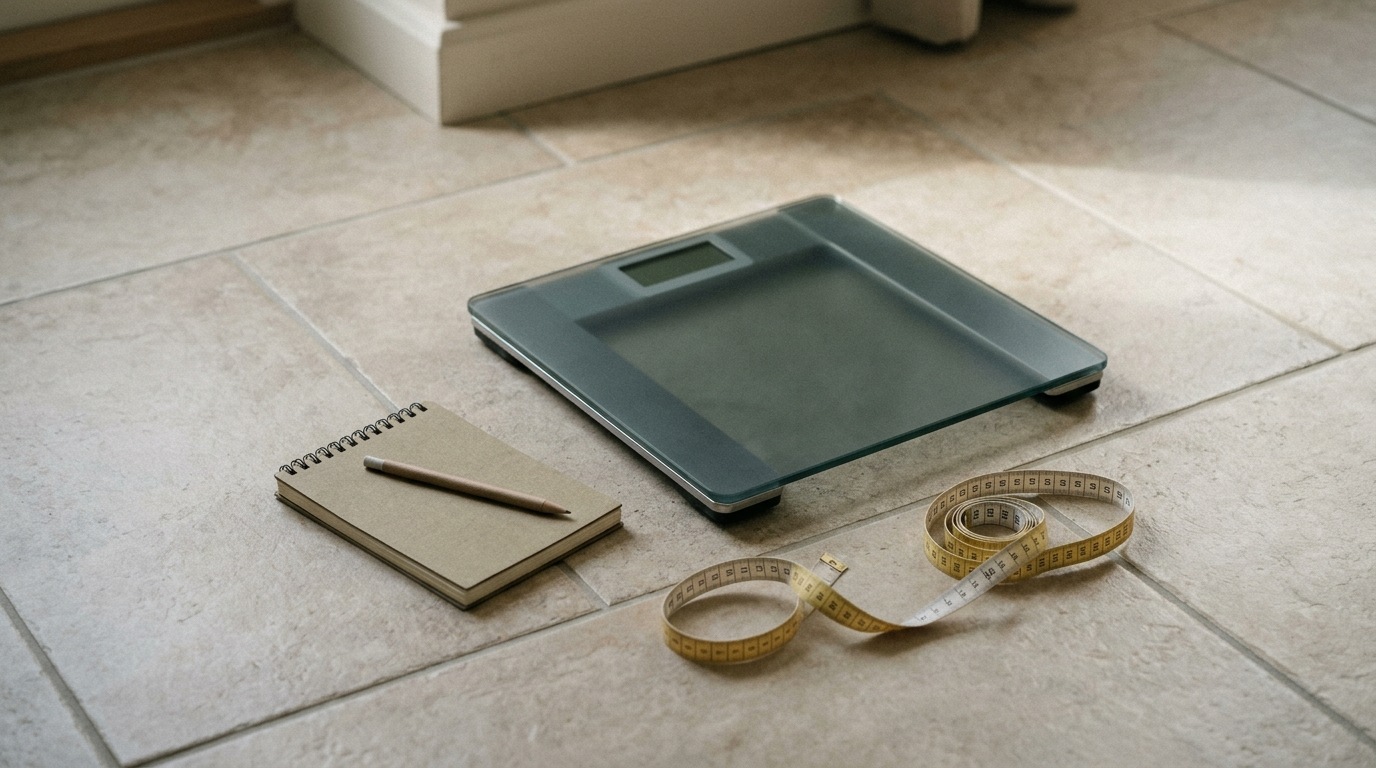
One small step: this week, choose one habit you could repeat on most days, such as a ten-minute walk after dinner or a piece of fruit with lunch, and write it on a calendar. That single habit is a better starting point than a dramatic goal, and it gives you something concrete to track.
Many people begin a weight-related goal by picking a number, then feel discouraged when the scale does not cooperate. A calmer approach sets goals you can control, tracks more than one signal and treats the numbers as information rather than a verdict. This guide explains how to set realistic goals, how to use the scale and other measures sensibly and how to keep tracking from becoming stressful.
This is general information, not medical advice or a diet plan. Weight and health are personal, so speak with your physician before changing how you eat or exercise, especially if you have a medical condition, take medicine or have a history of disordered eating.
In this guide
Goals you control
An outcome goal, such as reaching a certain weight, depends on many things outside your control. A process goal, such as walking five days a week, is entirely up to you. Process goals give you a daily win to aim for, and they build the habits that any longer-term goal depends on.
Good process goals share a few traits. They are specific, small and repeatable. “Eat more vegetables” is vague, while “add a vegetable to lunch on weekdays” can be checked off. Start with one or two, and add more only when the first ones feel automatic.
Why the scale moves
Body weight changes from day to day for reasons that have little to do with fat. Water, salt, the timing of meals, hormones, digestion and even a hard workout can shift the number by several pounds. A single reading is a snapshot, not a trend.
If you use a scale, weigh yourself at the same time of day, under similar conditions, and look at the average over a week rather than a single morning. Plot the weekly averages on a simple chart, and watch the direction over several weeks.
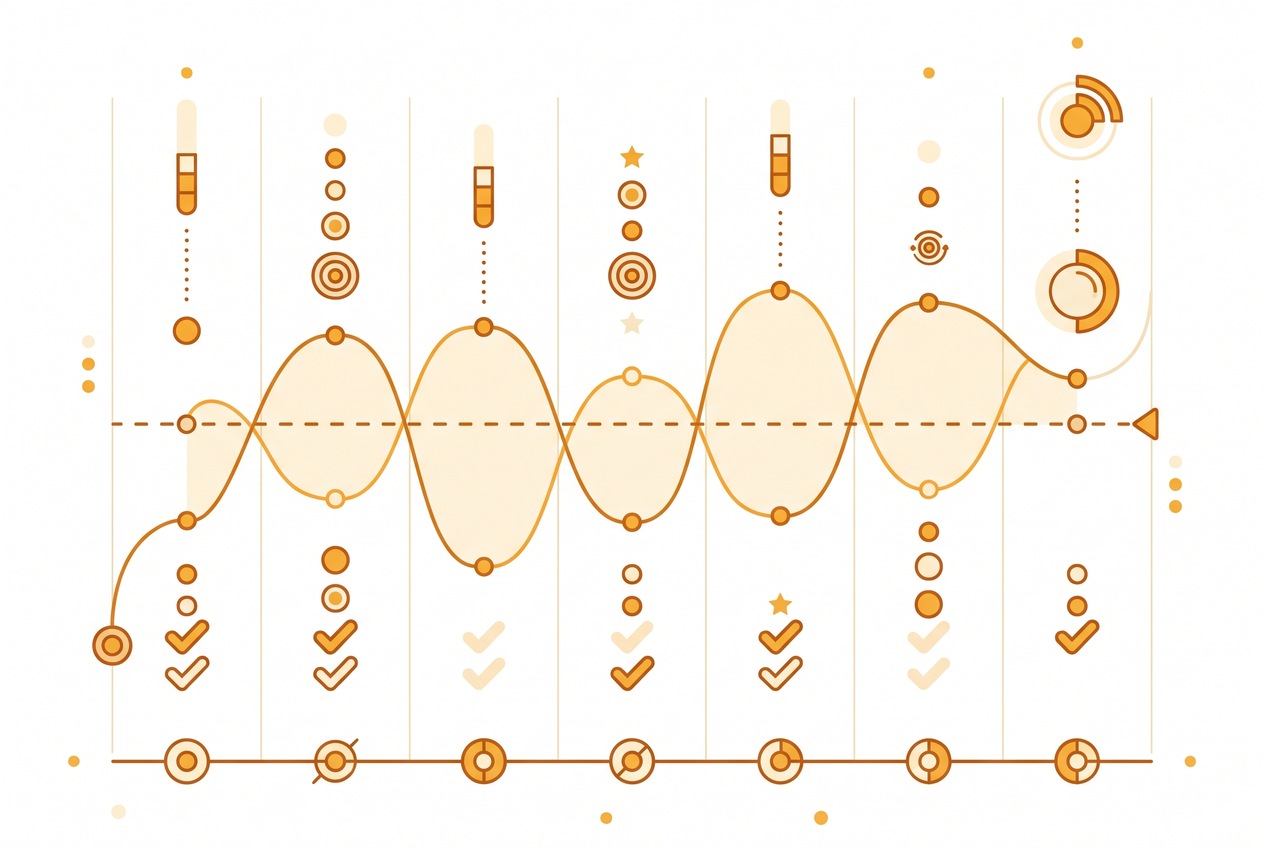
Other ways to track
The scale is only one tool, and some people find it unhelpful. Other signals can tell a fuller story.
| Signal | How to track it | What it can show |
|---|---|---|
| Measurements | Waist or hip, taken monthly | Changes the scale may miss |
| How clothes fit | Notes on a favorite pair of pants | Everyday progress |
| Energy and mood | A daily rating from one to five | How habits feel |
| Sleep | Hours per night | A supporting habit |
| Activity | Minutes or steps per day | Consistency |
| Habit streaks | Checkmarks on a calendar | Follow-through |
Choose two or three signals, not all of them. Tracking too much can feel like a second job.
A reasonable pace
Public health agencies, such as the Centers for Disease Control and Prevention, describe gradual and steady change as more sustainable than rapid change. Your physician can tell you what pace, if any, is appropriate for you. Be wary of programs that promise fast results, since extreme approaches are hard to maintain and may be unsafe.
Plateaus are normal. When the trend stalls, check habits first. Are you sleeping enough? Are meals regular? Has activity slipped? Small adjustments often help more than drastic ones.
Common tracking mistakes
A few habits make tracking harder than it needs to be.
- Weighing at different times of day and comparing the numbers.
- Reacting to a single high reading as if it were permanent.
- Tracking food in such detail that it becomes tiring and hard to sustain.
- Comparing your numbers with someone else’s.
- Dropping the whole system after one missed day.
If you notice yourself doing any of these, simplify. A short note and a weekly look at the trend are enough for most people. If you miss a few days, begin again without comment.
Keeping tracking healthy
Tracking should support you, not control you. Watch for signs that it is causing distress: checking the scale many times a day, feeling anxious about numbers or skipping meals to influence a reading. If that happens, take a break from the scale and talk with a professional. If you have a history of disordered eating, ask your physician or a licensed professional whether tracking weight is a good idea for you.
Celebrate non-scale wins, such as climbing stairs more easily or sleeping better. They matter just as much.
A monthly review
Once a month, sit down for ten minutes and look at your notes. Ask which habits you kept, which ones slipped and what made them easier or harder. Look at the weekly averages and any measurements together, and note how you felt. Then choose one adjustment for the next month, such as moving a walk to a different time or preparing lunch the night before. A short, regular review turns tracking into learning, and it keeps your plan flexible as life changes.
Try this week
- Choose one process goal and write it down.
- Pick one or two signals to track.
- Weigh yourself no more than a few times per week, if at all, and record the average.
- Take one measurement on the first day of the month.
- Note how you feel at the end of the week.
Questions for your physician
- Is it appropriate for me to focus on weight right now?
- What pace or goals make sense for me?
- Would tracking my weight help or hurt me?
- Are there tests or screenings I should have?
- Should I see a dietitian or another specialist?
Takeaways
Set goals you can control, track a few signals and use averages instead of single readings. Expect ups and downs, move at a pace that suits you and talk with your physician. Steady habits matter more than any single number.