One small step: at your next lunch, add one source of protein and one source of fiber to the plate, such as beans, eggs, yogurt, vegetables or whole grains, and notice how you feel an hour or two later.
Some meals feel satisfying for hours, and others leave you hungry again almost at once. The difference often comes down to what is on the plate. Protein and fiber both slow digestion and help you feel full, while meals built mainly from refined starches and sugars tend to wear off faster. This guide explains how protein and fiber work, which foods supply them and how to put together meals that keep you satisfied without strict rules.
This is general information, not medical advice or a diet plan. Nutrition needs vary, so speak with your physician or a registered dietitian before changing your eating, especially if you have a medical condition such as kidney disease, take medicine or have a history of disordered eating.
In this guide
Why protein helps
Protein is a nutrient found in meat, fish, eggs, dairy, beans, lentils, tofu, nuts and seeds. It takes longer to digest than refined carbohydrate, and many people find that meals with protein keep hunger away longer. The general recommended dietary allowance for healthy adults is about 0.8 grams of protein per kilogram of body weight per day, though needs differ with age, activity and health.
You don’t need to count grams to benefit. A palm-sized portion of a protein food at most meals is a simple guide, and your physician or dietitian can suggest an amount that suits you.
Why fiber helps
Fiber is the part of plant foods that the body does not fully digest. It adds bulk, slows the movement of food through the gut and supports regular digestion. The Dietary Guidelines for Americans note that many adults eat less fiber than recommended. A common reference is about 25 to 38 grams per day for adults, depending on age and sex.
Good sources include beans, lentils, vegetables, fruit with the skin on, whole grains, nuts and seeds. Add fiber gradually and drink plenty of water, since a sudden jump can cause gas and discomfort.
Volume and slow eating
Foods with a lot of water or air, such as soups, vegetables and fruit, take up room on the plate without adding many calories. Starting a meal with a salad or a broth-based soup is a simple way to add volume. Eating slowly gives your body time to register fullness, so put your fork down between bites, chew thoroughly and take a few sips of water.
Building a plate
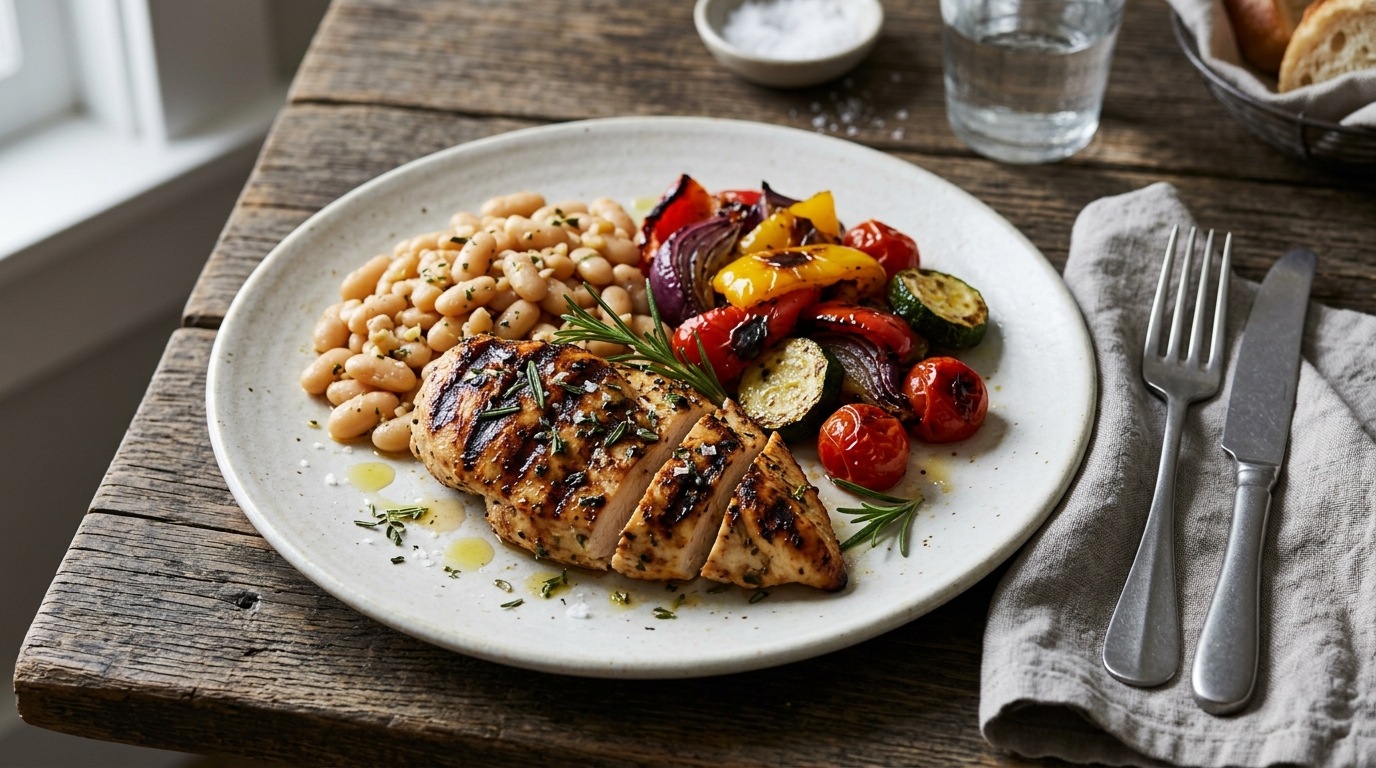
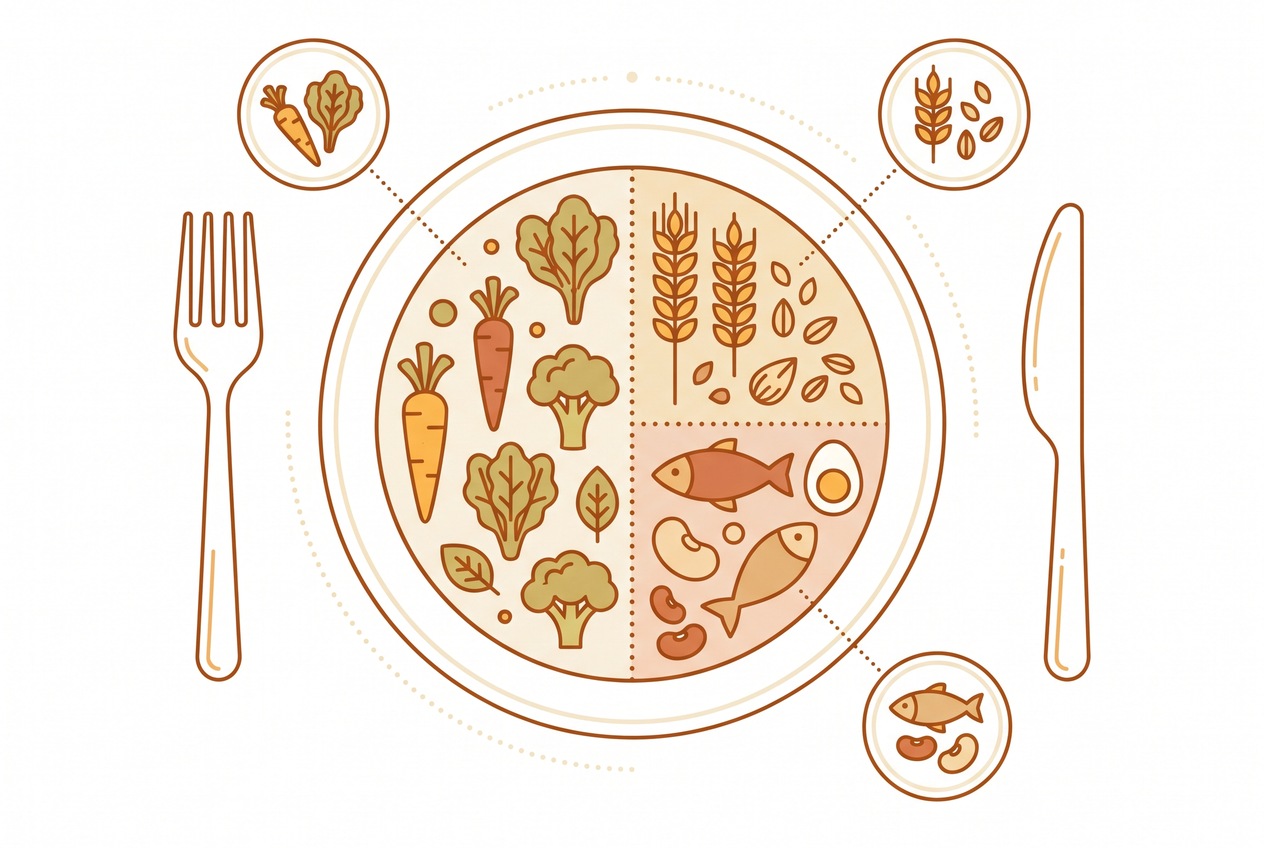
The USDA’s MyPlate guide offers a simple picture: fill about half the plate with fruits and vegetables, about a quarter with protein foods and about a quarter with grains, preferably whole grains, plus a serving of dairy or a fortified alternative if you like. It is a flexible guide, not a rule.
| Meal | Protein | Fiber | A simple combination |
|---|---|---|---|
| Breakfast | Eggs or yogurt | Oats or berries | Oatmeal with berries and yogurt |
| Lunch | Chicken, tuna or tofu | Beans, greens, whole grain bread | Bean and vegetable soup with a sandwich |
| Dinner | Fish, lean meat or lentils | Vegetables and brown rice | Baked fish with roasted vegetables and rice |
| Snack | Cheese or nuts | Apple or carrots | Apple slices with peanut butter |
Smart swaps
- Choose whole-grain bread, rice or pasta in place of refined versions some of the time.
- Add beans or lentils to soups, salads and casseroles.
- Keep cut vegetables and hummus ready to eat.
- Choose plain yogurt and add your own fruit.
- Snack on nuts, fruit or cheese rather than chips.
You don’t need to give up favorite foods. Add the protein and fiber first, and enjoy the rest in portions you like.
Reading labels
Check the Nutrition Facts label for protein and dietary fiber. A product with more fiber and less added sugar usually keeps you full longer. Compare similar products, such as two breakfast cereals or two breads, and pick the one that suits your taste and goals.
Budget-friendly and quick options
Protein and fiber don’t need to be expensive. Dried or canned beans and lentils are among the least costly protein and fiber sources. Eggs, canned fish, plain yogurt and frozen vegetables are affordable and keep well. Oats, brown rice and whole-wheat pasta stretch a meal for little money.
For quick meals, try a bean and vegetable soup, a vegetable omelet, a can of tuna on whole-grain toast with a side salad or a bowl of yogurt with fruit and nuts. Frozen vegetables are as useful as fresh ones, and they cut down on waste. Rinse canned beans to reduce sodium if that is a concern for you.
Planning ahead
A little prep makes it easier to eat well on busy days. Cook a batch of beans or grains on the weekend. Wash and cut vegetables. Hard-boil a few eggs. Keep canned fish, frozen vegetables and whole-grain wraps in the pantry for quick meals.
Try this week
- Add a protein food to breakfast on three days.
- Add one fiber-rich food to lunch every day.
- Start dinner with vegetables or a soup.
- Eat one meal slowly, without a screen.
- Notice which meals keep you full longest.
Questions for your physician
- How much protein is right for me?
- Do I have any conditions that affect how much protein or fiber I should eat?
- Should I see a registered dietitian?
- Are there foods I should limit or avoid?
- How does my medicine interact with my diet?
Takeaways
Protein, fiber and volume help meals feel satisfying. Add them to the plate, eat slowly and prepare ahead so that good choices are easy. Talk with your physician or a dietitian about your own needs.