One small step: this week, stand up from a chair without using your hands, ten times, slowly. That is a squat, and it is the first movement in a beginner strength routine you can do at home with almost no equipment.
Strength training builds and maintains muscle, supports everyday tasks such as carrying groceries and climbing stairs, and fits well alongside walking or other activity. Federal Physical Activity Guidelines for Americans recommend muscle-strengthening activity on at least two days per week for adults. You don’t need a gym membership to begin. This guide outlines a simple weekly routine, the basic moves and some tips for getting started safely.
This is general information, not medical advice or a personal training plan. Speak with your physician before starting a new exercise routine, especially if you have a medical condition, an injury, joint problems or heart or lung concerns, or if you have been inactive for a long time.
In this guide
What you need
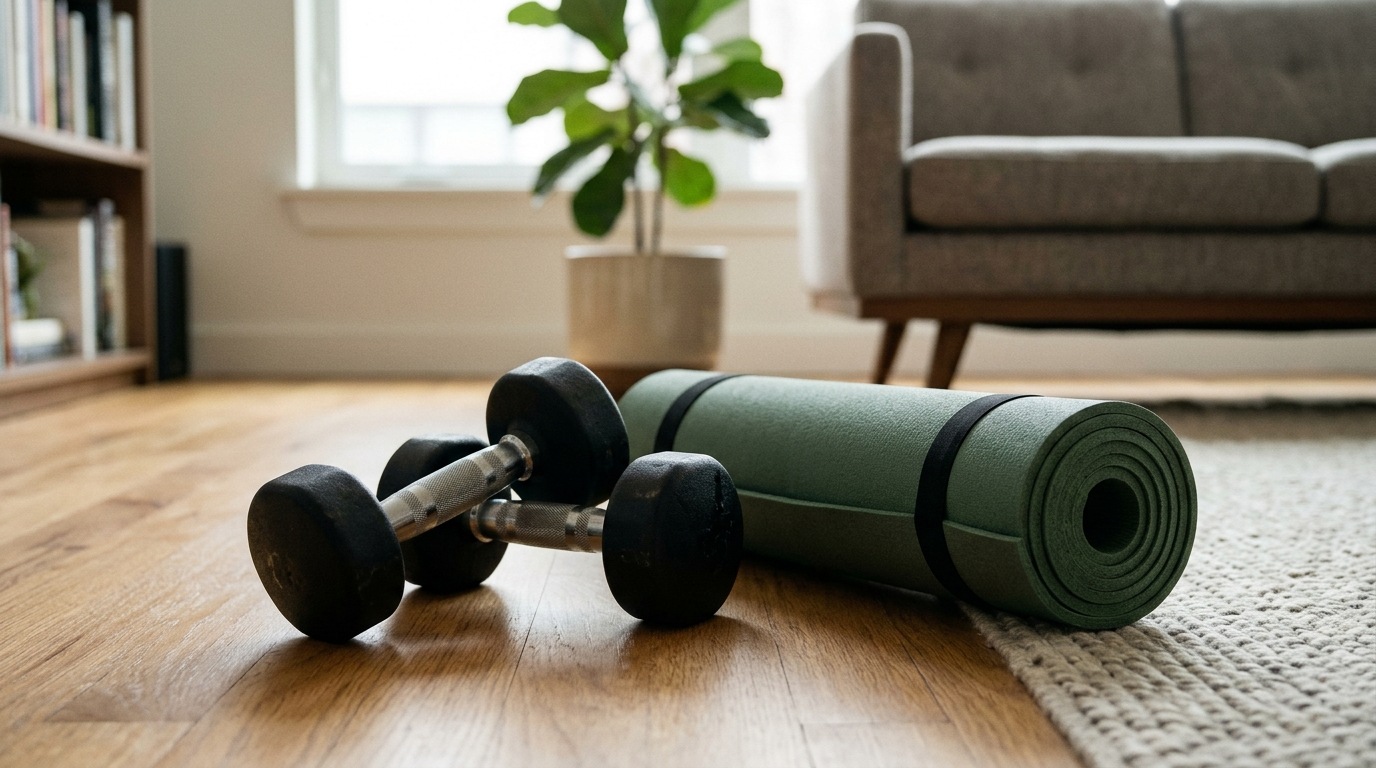
You can start with your body weight. If you want to add resistance, these items are inexpensive and take little space:
- A pair of light dumbbells, or two water bottles or cans.
- A resistance band.
- A sturdy chair.
- An exercise mat or a carpeted floor.
- Supportive shoes.
Basic moves
Squat to a chair
Stand in front of a chair, feet shoulder-width apart. Push your hips back and bend your knees as if to sit, tap the chair lightly and stand back up. Keep your chest up and your knees in line with your toes.
Wall or counter push-up
Stand facing a wall or kitchen counter, hands slightly wider than shoulders. Bend your elbows to bring your chest toward the surface and push back. Move to a lower surface, like a sturdy table, as you get stronger.
Row
Hold a dumbbell or a band anchored to a door. Pull your elbow back toward your hip while squeezing your shoulder blade. Keep your back flat.
Glute bridge
Lie on your back with knees bent and feet flat. Press through your heels to lift your hips, pause and lower slowly.
Standing hip hinge
Stand with feet hip-width apart, push your hips back while keeping your back straight and return to standing. Hold a light weight when ready.
Carry
Hold a weight in each hand, stand tall and walk slowly for 20 to 30 seconds. This builds grip and core strength.
A simple weekly routine
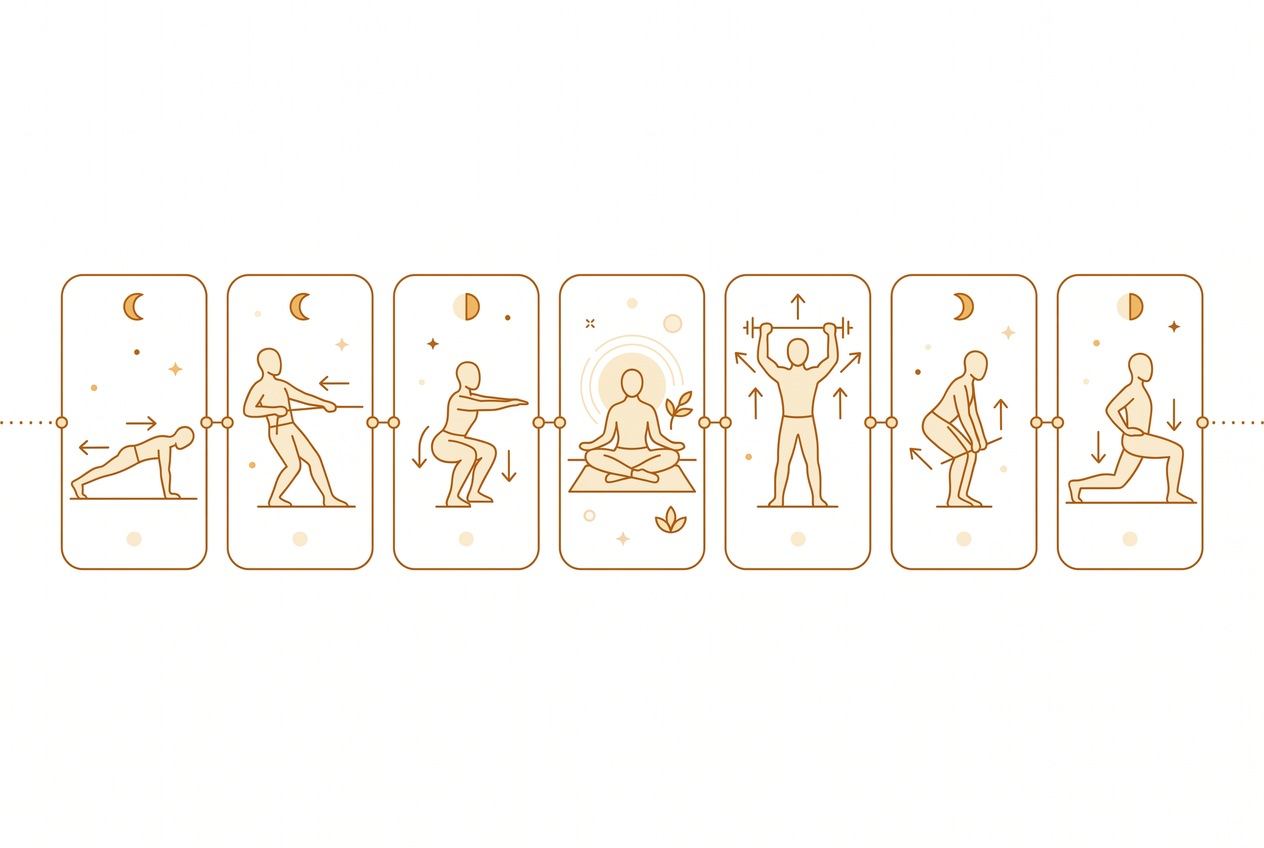
Train two or three days per week, with at least a day of rest in between. Do each move for 8 to 12 repetitions, rest for 30 to 90 seconds and complete one or two rounds.
| Day | Focus | Moves |
|---|---|---|
| Day 1 | Full body | Squat to chair, wall push-up, row, glute bridge |
| Day 2 | Rest or walk | Easy activity |
| Day 3 | Full body | Hip hinge, row, wall push-up, carry |
| Day 4 | Rest or walk | Easy activity |
| Day 5 | Full body | Squat to chair, glute bridge, row, push-up |
Start with one round and add a second as you get comfortable. Over several weeks, add repetitions, use a heavier weight or move to a harder variation.
Warm-up and cool-down
Spend five minutes warming up with marching in place, arm circles and gentle leg swings. After the workout, stretch gently and breathe slowly. A warm-up prepares the muscles, and a cool-down helps you wind down.
Form and safety
- Move slowly and with control.
- Breathe steadily. Exhale as you push or lift, and don’t hold your breath.
- Stop if you feel sharp pain, dizziness or chest discomfort, and speak with your physician.
- Choose a weight that makes the last two repetitions feel challenging but still allows good form.
- Clear the space of obstacles.
- Keep water nearby.
Muscle soreness a day or two after starting is common. Pain in a joint is not, and it is a sign to stop and get advice.
Progressing safely
Progress comes from gradually asking a little more of your muscles. When a move feels easy for the top of your repetition range, make it slightly harder. You can do that in several ways.
- Add one or two repetitions.
- Slow down the lowering part of the movement.
- Use a heavier weight or a stronger band.
- Move to a harder variation, such as a lower surface for push-ups.
- Add a second round.
Change only one thing at a time, and wait a week or two between changes. If a new level feels too hard or causes pain, return to the previous one. Rest days are part of the plan, since muscles recover and adapt between sessions. Sleep and eating enough also support progress.
Making it stick
Pick set days and times, and put them on your calendar. Keep equipment where you can see it. Pair your workout with something you enjoy, like a favorite podcast. Track what you did, and notice small improvements, such as an extra repetition. Missed a session? Resume at the next scheduled day.
Try this week
- Do the squat to chair move once a day.
- Try two full-body sessions with one round each.
- Take a walk on a rest day.
- Note how you feel during and after.
- Write down one question for your physician or a qualified trainer.
Questions for your physician
- Is strength training safe for me, and how should I start?
- Are there movements I should avoid?
- How does my medicine affect exercise?
- Would a physical therapist or trainer help me with form?
- How often should I train?
Takeaways
Strength training can start at home with a chair, a wall and a few light weights. Learn the basic moves, train two or three days per week, focus on form and rest between sessions. Check with your physician first, and build up slowly.